Grounding Cords Wholesale: Connector Compatibility, Resistance, and Quality Control
When sourcing grounding cords wholesale, procurement teams are selecting a complete accessory assembly, not simply a cable. The cord must match the intended grounding bedding product, approved connector system, packaging configuration, quality plan, and destination-market requirements.
IN THIS GUIDE
Introduction
Similar-looking cords may differ in connector geometry, cable construction, resistance design, labeling, or market-facing termination. These differences can lead to…
Grounding Cords Wholesale
A grounding cord may be supplied as an accessory for a sheet, mat, pillowcase, or another conductive textile product. One…
Product specifications
A useful RFQ describes the cord as a controlled assembly. Length and color are important, but they are not enough…
Introduction: Why Grounding Cords Wholesale Matters to B2B Buyers
Similar-looking cords may differ in connector geometry, cable construction, resistance design, labeling, or market-facing termination. These differences can lead to incompatible inventory, delayed product launches, additional inspection, and avoidable customer-service costs.
A strong request for quotation should therefore define both cord terminations, nominal dimensions, materials, resistance requirements, inspection methods, branding, packaging, traceability, and documentation. This enables importers, distributors, retailers, and private-label brands to compare like-for-like offers before approving samples or production.
“Grounding cord” and “earthing cord” are sourcing terms, not compatibility guarantees. Identify every assembly by an approved SKU, specification revision, and mating-product reference.
Grounding Cords Wholesale: What Buyers Need to Know
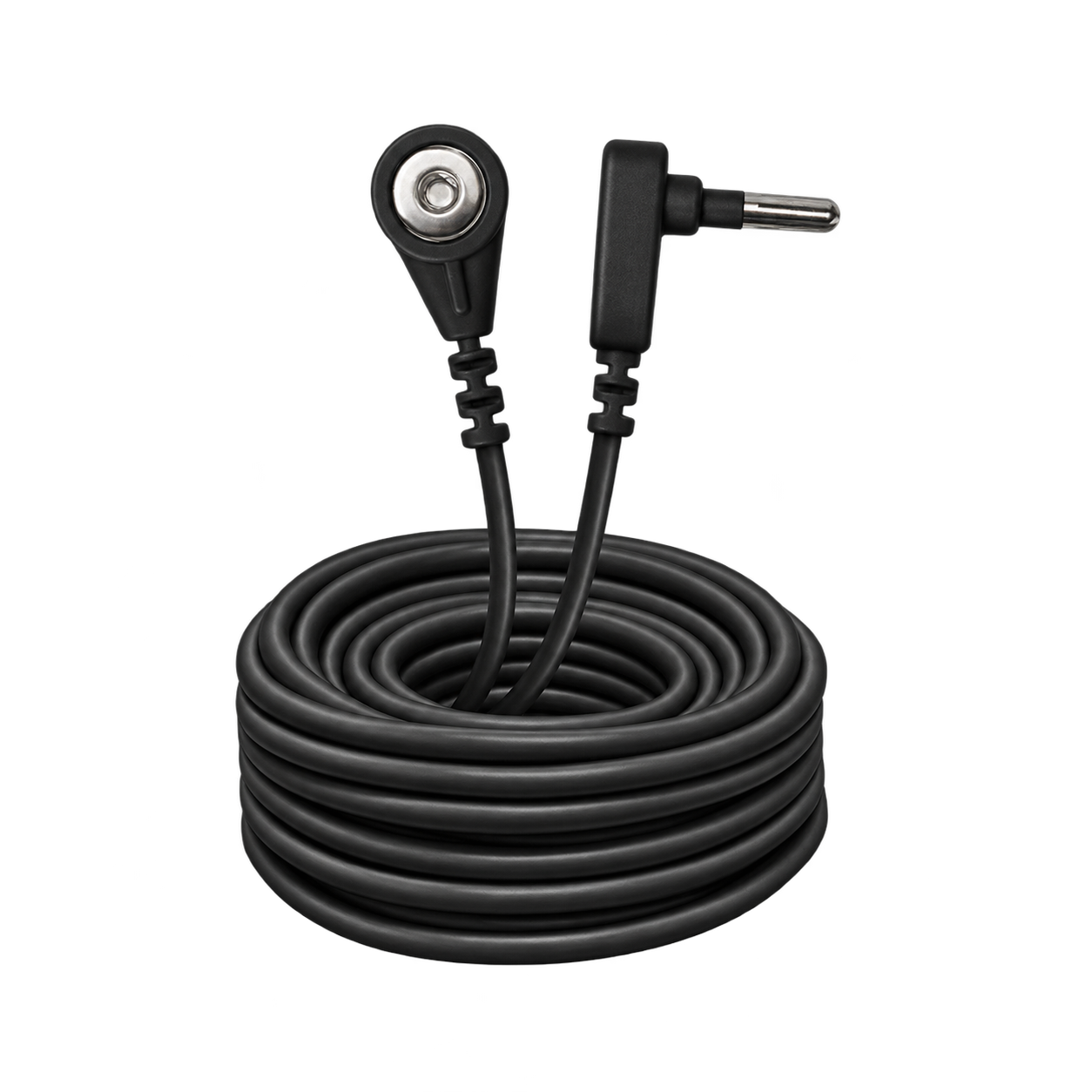
A grounding cord may be supplied as an accessory for a sheet, mat, pillowcase, or another conductive textile product. One end interfaces with the product, while the other uses a market-facing connector or accessory configuration defined by the product system.
Buyers should not assume that cords from different product ranges or suppliers are interchangeable. The product-side connector, internal construction, resistance component, and external termination can vary. Compatibility should be established through drawings, samples, documented requirements, and agreed test results.
Wholesale quotations must also define the commercial unit. A price might cover an individual cord, a packaged accessory, or a cord included within a complete bedding set. Ask suppliers to itemize:
- The cord assembly and specified connectors
- Any separate adapter or accessory
- The built-in resistor’s nominal value and tolerance
- Inner cartons and export cartons
- Inspection or shipment records
- Optional branding or customized components
Quotations should reference the exact SKU and specification, currency, trade terms, validity, packaging basis, inclusions, and exclusions. Identify substitutions explicitly, not simply as “standard” or “equivalent.”
The phrases “grounding cord manufacturer” and “earthing cord supplier” are sourcing terms, not proof of a company’s production role or capabilities. Buyers should establish whether a potential partner manufactures, assembles, subcontracts, trades, or combines these functions.
The Product Specifications That Affect Buyer Decisions
A useful RFQ describes the cord as a controlled assembly. Length and color are important, but they are not enough to define the product.
Connector compatibility
Specify both ends separately. For the product-side connector, provide a dimensioned drawing, clear photographs, a mating-product reference, and physical samples when appropriate. State the required dimensions, tolerances, orientation, contact arrangement, housing shape, and acceptance criteria.
For the market-facing end, identify the target country and required connector or accessory format. Ask for evidence applying to the exact component, model, electrical rating, and construction being offered. General catalog pages or evidence for a similar component should not automatically be accepted.
A compatibility review may include dimensional fit, connector alignment, retention, repeated-connection performance, and consistency across multiple samples. The appropriate tests and acceptance limits must be defined by the buyer, supplier, and qualified technical parties for the specific product system.
Cable, materials, and conductive construction
The RFQ should cover:
- Nominal cable length and permitted tolerance
- Conductor material and construction
- Insulation or outer-jacket material
- Cable diameter, color, finish, and flexibility requirements
- Connector-housing material, color, and finish
- Strain-relief construction
- Resistance-component type, position, nominal specification, and tolerance
- Required electrical ratings
- Material declarations or restricted-substance documents
- Approved alternatives, if substitutions are permitted
Suppliers should identify the proposed materials rather than relying on broad descriptions such as “high quality cable.” If multiple materials are acceptable, list each approved option and the evidence required before use.
Purchase orders should refer to the controlled specification and its revision. This helps prevent unapproved changes to conductors, jackets, molded housings, resistance components, or component sources.
Built-in resistor values, safety screening, and testing
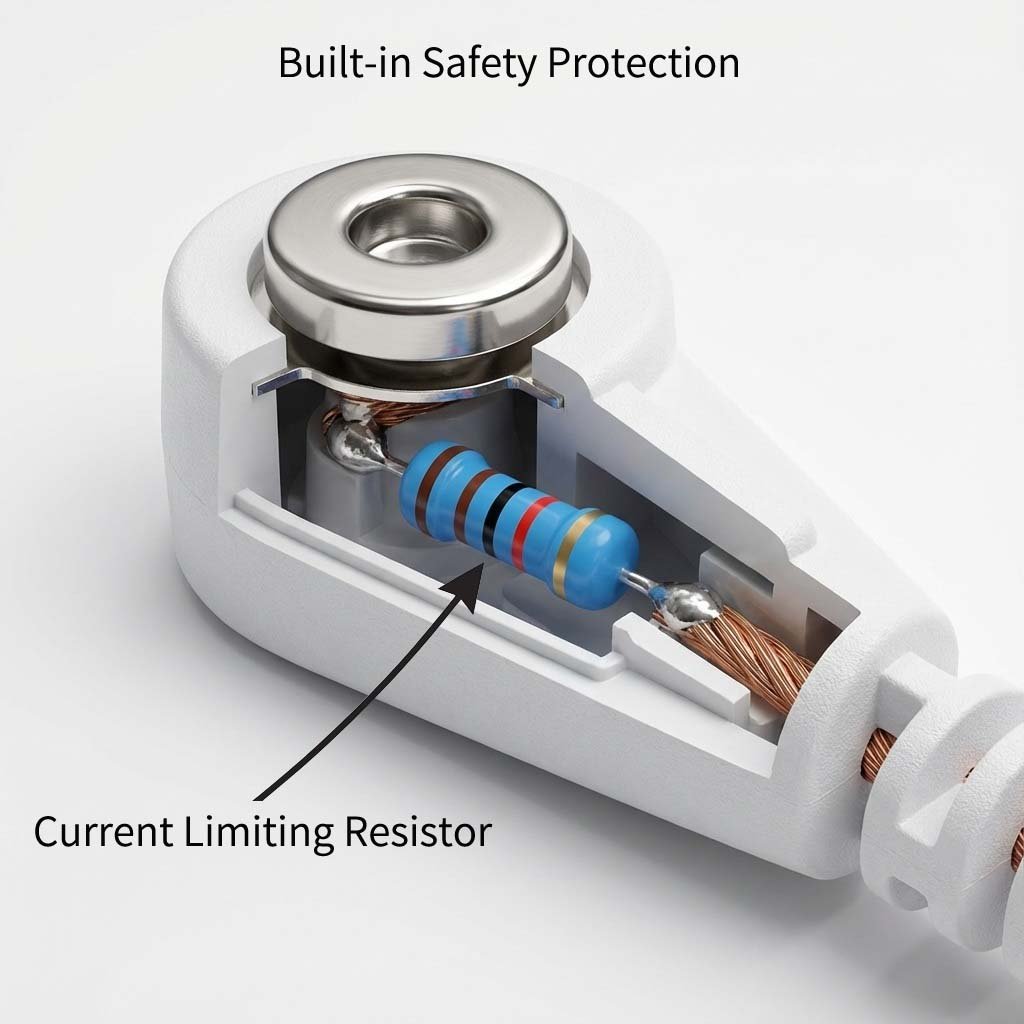
Common nominal resistor values to discuss when specifying grounding accessory cords include 10kΩ (10,000Ω), 51kΩ (51,000Ω), and 100kΩ (100,000Ω). A 100kΩ resistor is a common selection in this product category. The RFQ should identify the selected value explicitly rather than leaving it to an unspecified “standard” cord.
An appropriately specified resistor is a current-limiting element. Under the same applied voltage, 100kΩ limits current more than 10kΩ or 51kΩ. It can form part of an intended grounding connection, but resistance alone does not establish electrical safety or prove health benefits. The complete cord, component ratings, connector arrangement, and intended grounding performance still require appropriate design verification.
Be cautious of grounding cords with no declared built-in resistor. If the approved specification requires an internal resistor, a cord that omits or bypasses it is nonconforming and may create a safety risk. Reject or quarantine such units; do not approve them merely because the connectors fit or the cable looks correct.
Specify component value, tolerance, position, and ratings separately from the end-to-end assembly reading. Define measurement points, test equipment, conditions, sampling, frequency, and acceptance criteria. Link inspection records to the SKU, lot, and specification revision, and resolve out-of-specification results before shipment.
Packaging and traceability
Packaging specifications should identify the retail unit, accessory count, insert requirements, label content, barcode format, inner-carton quantity, master-carton configuration, and carton marks. Final dimensions and weights should be confirmed from an approved packing sample or production-representative pack-out.
Lot codes or equivalent identifiers should connect finished cords with production and inspection records. Clear SKU identification is especially important when several connector formats have similar appearances. Labels should remain distinguishable during receiving, storage, order picking, and final packing.
Planning Your Grounding Bedding Program?
Share target products, sizes, quantities, branding, packaging, and destination markets for an OEM quotation.
OEM and Private-Label Decisions
OEM grounding cords introduce both branding choices and technical approval responsibilities. Customization may involve cable length, color, connector housing, product-side interface, market-facing format, printed logos, labels, inserts, retail boxes, and carton marks.
Brand owners should separate cosmetic customization from functional modification. Artwork changes generally require visual and packaging approval. A revised connector, cable construction, resistance component, or material requires a controlled technical review supported by relevant evidence.
A practical OEM process includes:
- RFQ and intended-market review
- Drawing and specification confirmation
- Material and construction disclosure
- Artwork and packaging approval
- Prototype or pre-production sample review
- Agreement on test and inspection criteria
- Retention of an approved reference sample
- Written authorization for mass production
- Change control after approval
The supplier should disclose whether a sample uses temporary tooling, substitute materials, manually prepared branding, or non-production packaging. Before production approval, the buyer should confirm which aspects of the sample represent the intended mass-production construction.
The approved reference sample should carry a SKU, date, revision, and approval status. Appearance approval should not be treated as approval of technical characteristics that were not reviewed.
Document control is equally important for private-label packaging. Drawings, artwork, information inserts, inspection standards, and quotations should use revision identifiers. Purchase orders should reference those revisions to reduce the risk of obsolete files entering production.
Wholesale Terms: MOQ, Samples, Lead Time, and Packaging
Wholesale buyers need commercial terms that correspond to the selected specification. Order conditions can vary with connector design, material purchasing, cable color, printing process, packaging, tooling, and production setup. Exact values should come from a written supplier quotation for the approved configuration.
Ask the supplier to distinguish among:
- Prototype or sample quantities
- Trial-order quantities
- Production MOQ
- MOQ by color, connector, or packaging version
- Printed-packaging MOQ
- Replacement-accessory quantities
Sample charges, tooling costs, artwork fees, inspection charges, and freight should be itemized where applicable. If the buyer funds tooling, the agreement should address ownership, identification, storage, maintenance, permitted use, and future access.
Lead time should be presented by stage rather than as one unexplained number. Relevant stages may include engineering review, material preparation, sampling, buyer approval, production, inspection, and shipment readiness. The quotation should identify the event that starts each schedule, such as final specification approval or receipt of the agreed commercial documents.
Packaging quotations should list everything included in the unit price. Buyers should confirm the number of cords and accessories per retail unit, insert languages, barcode placement, carton quantities, pallet requirements, and any market-specific labeling. Pack-out details should be approved before printed packaging is released in volume.
How to Evaluate a Grounding Cord Manufacturer or Supplier
Manufacturer evaluation should combine product evidence, process control, communication, and commercial execution. Unit price alone does not reveal whether a supplier can maintain connector compatibility, trace materials, control revisions, or reproduce an approved sample.
A due-diligence review can request:
- A specification matching the offered sample
- Dimensioned connector drawings
- Material and component controls
- Defined resistance and continuity test criteria
- Incoming, in-process, and final-inspection procedures
- Test-equipment identification and calibration status
- Lot traceability and record-retention practices
- Defect classifications and acceptance criteria
- Nonconformance and corrective-action procedures
- Packaging inspection standards
- Change-notification procedures
- Capacity information relevant to the requested schedule
- Export and shipping-document experience relevant to the order
Claims about equipment, capacity, export history, or quality systems should be supported by current evidence appropriate to the sourcing decision. Buyers can also compare several sample units to assess consistency in length, molding, connector fit, marking, assembly finish, and packaging.
Communication quality provides additional insight. A capable supplier should identify missing information, document assumptions, distinguish confirmed details from open items, and explain proposed deviations. Vague descriptions should be replaced with measurable requirements or referenced documents before order placement.
Change control deserves particular attention. The purchasing agreement should define which changes require advance notice and buyer approval. These may include changes to materials, component sources, tooling, production location, subcontractors, construction, inspection methods, or packaging.
Receiving inspection should follow the same approved documents used for production. Importers can check purchase-order identity, SKU and lot labels, quantities, carton condition, packaging revision, and required records. Any technical tests should use the agreed equipment, sampling plan, and acceptance criteria.
Market and Import Considerations
The United States, Canada, European destinations, Australia, and Singapore should each be reviewed against the intended cord configuration. A single global SKU should not be assumed suitable without market-specific assessment.
Create a country-level matrix covering connector or accessory format, electrical ratings, language, labeling, packaging statements, documentation, importer information, and customs classification. Europe may require separate review by destination country when product configurations or commercial requirements differ.
Market suitability and supporting evidence should apply to the exact component, construction, model, and intended use. A supplier’s general export experience does not establish that a particular cord meets every requirement in a destination market.
The RFQ should allocate responsibility for technical review, translations, label approval, classification, testing, and document retention. Qualified local professionals should review applicable requirements before tooling, bulk materials, or printed packaging are authorized.
Marketing and packaging teams should also use controlled product information and avoid unsupported outcome claims. Technical documents, sales materials, and marketplace listings should remain consistent with the approved specification.
Buyer FAQ
Frequently Asked Questions
1. Are grounding cords from different suppliers interchangeable?
Interchangeability should not be assumed. Connectors can differ in dimensions, alignment, retention, contact arrangement, and tolerances. Cable construction and resistance design may also vary. Compare controlled drawings, mating samples, specifications, and agreed compatibility results before approval.
2. What resistance information belongs in an RFQ?
Specify the built-in nominal value, such as 10kΩ, 51kΩ, or 100kΩ, alongside tolerance, position, ratings, test points, and acceptance criteria. Distinguish component resistance from the assembly reading. If a required resistor is missing, treat the cord as nonconforming rather than accepting it on appearance alone.
3. What samples should wholesale buyers request?
Request cord samples representing the proposed construction, along with mating products when needed and a complete packaged sample. Ask the supplier to disclose any differences between samples and planned production. Record the final approved sample’s SKU, revision, date, and approval scope.
4. How should buyers compare supplier quotations?
Use a comparison sheet covering connectors, materials, dimensions, tolerances, resistance design, testing, accessories, packaging, MOQ, sample costs, tooling, lead-time stages, trade terms, and exclusions. Quotations are comparable only when they address substantially the same approved specification.
5. Which quality-control records may be required?
Depending on the agreed program, buyers may request incoming-material checks, dimensional inspection, assembly results, electrical test records, packaging checks, lot identification, and final-release documentation. The purchase agreement should define which records accompany shipments and how long relevant records are retained.
6. Can one OEM package be used in every target market?
Only after separate market assessment. Connector formats, ratings, language, labeling, documentation, importer responsibilities, and packaging requirements may differ. Where necessary, create separate SKUs and approval files for each market or configuration.
Contact Supplier
Next Steps for B2B Buyers
A successful grounding cords wholesale program begins with documented compatibility, controlled specifications, defined resistance requirements, production-representative samples, and repeatable quality control. OEM buyers should control customization and revisions, wholesale buyers should clarify commercial terms, and supplier evaluators should require evidence relevant to the exact product and market.
For an actionable response, provide your target countries, forecast quantity, product-side connector details, cord length and color, material requirements, resistance specification, market-facing format, branding files, packaging needs, sample request, inspection criteria, required records, and delivery schedule.
Request a quotation and samples—send us your RFQ to receive proposed specifications, sample options, MOQ details, quotation inclusions, and lead-time stages.