Conductive Fabric for Grounding Products: A B2B Material Sourcing Guide
Specifying conductive fabric within finished grounding bedding involves more than comparing a material name and unit price. Procurement teams must understand the textile composition, conductive construction, electrical test method, finished-product design, quality controls, packaging, and commercial terms behind each offer.
THREE SOURCING DECISIONS
Material specification
Identify the conductive fibre and textile construction used in the completed product.
Product integration
Define sewing, connection points, accessories, testing, and packaging for the complete bedding SKU.
OEM or private label
Agree on market-specific sizes, branding, instructions, and presentation for the finished item.
Introduction: Why Conductive Fabric for Grounding Products Matters to B2B Buyers
Similar finished products may use different base fibres, conductive yarns, textile weights, or resistance tests. Without a detailed specification, their quotations are not directly comparable.
For importers, distributors, retailers, and private-label brands, the objective is to create a clear RFQ for finished grounding bedding that suppliers can quote consistently. Aisiting supplies finished grounding bedding products; it does not offer raw fabric rolls as a standalone wholesale item. This guide explains the material information to request, the evidence to review, and the approval steps to complete before placing a finished-product order.
Conductive Fabric for Grounding Products: What Buyers Need to Know
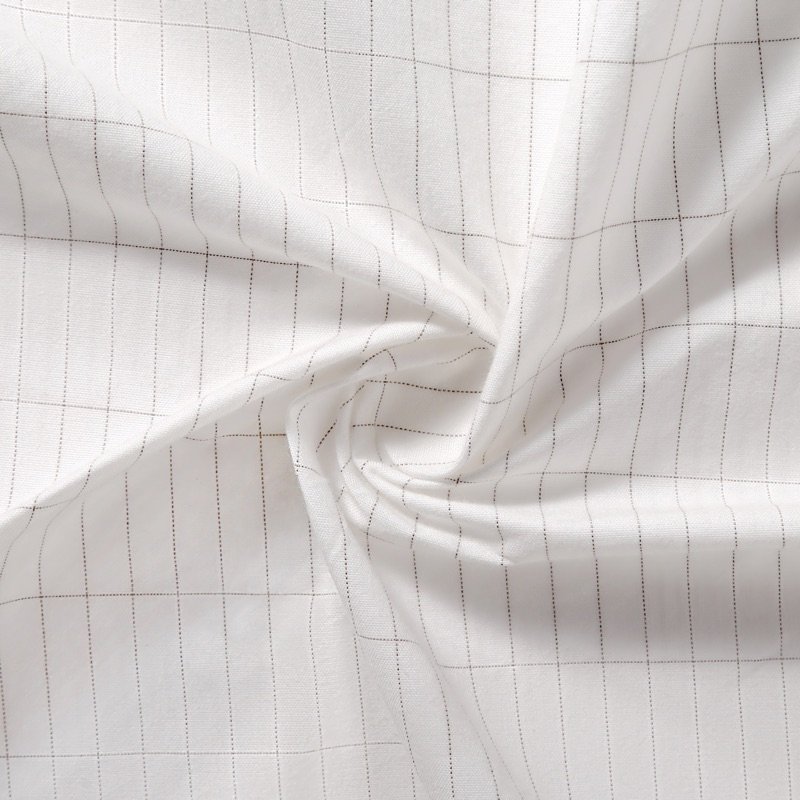
Conductive fabric is a textile engineered with electrically conductive components. Depending on the design, conductivity may come from conductive fibres, plated or coated yarns, embedded filaments, printed elements, or another construction specified by the manufacturer. The exact composition and conductive pathway must be confirmed for each product.
In grounding bedding, the fabric is only one part of the finished system. Conductive continuity can also depend on seams, connectors, attachment points, grounding cords, compatible accessories, and assembly methods. A suitable material cannot therefore be selected from a fibre description alone.
“Silver fabric” is not a complete specification. Silver-plated conductive fibre has a silver coating on a base fibre; it is not solid-silver fibre. Buyers should document the base fibre, plating, yarn arrangement, finishing, and integration into the finished item. Product-specific silver content and electrical characteristics require controlled specifications and representative testing.
For a finished-product programme, buyers should distinguish between three decisions:
- Material specification: Identify the conductive fibre and textile construction used in the completed product.
- Product integration: Define sewing, connection points, accessories, testing, and packaging for the complete bedding SKU.
- OEM or private label: Agree on market-specific sizes, branding, instructions, and presentation for the finished item.
These decisions depend on the buyer’s quality resources, order volume, and market responsibilities. The manufacturer should identify the material sourcing, assembly, and testing it controls. If an upstream conductive textile supplier is involved, link its records to the finished-product specification.
The Product Specifications That Affect Buyer Decisions
A useful RFQ converts general product ideas into measurable requirements. Buyers should ask suppliers to complete the same specification form so that offers can be compared like for like.
Textile composition and construction
Request the declared fibre composition, conductive component, yarn or plating description, knit or weave structure, colour, finish, and any relevant treatment. For silver-plated fibre, ask how the coating is applied, how the silver content is stated, and whether any anti-oxidation treatment is part of the approved specification. A treatment intended to slow oxidation should not be presented as a proven lifetime or wash-durability benefit without product-specific evidence. Do not assume that two fabrics with similar composition labels have the same construction or performance.
The RFQ should also state the intended application. A material for a fitted sheet may need different handling, stretch, sewing, or dimensional characteristics from fabric intended for a flat sheet, pillowcase, mattress cover, mat, or product panel.
Dimensions and physical properties
Confirm the following details of the material as integrated into the finished bedding:
- Declared textile composition and fabric weight with the agreed measurement method
- Finished-product dimensions, seam layout, and connection-point placement
- Size tolerances and the method used to inspect completed items
- Colour standard and permitted shade variation
- Shrinkage or dimensional-change requirements and test conditions
- Stretch, recovery, hand feel, and appearance criteria where relevant
- Defect classification, inspection system, and allowable tolerance
Dimensions should specify the measurement state and tolerance. For finished bedding, state whether measurements apply before laundering, after laundering under an agreed method, or both.
Conductive performance
Ask for the electrical property being measured, the unit, test equipment, electrode arrangement, specimen conditioning, measurement direction, sampling position, and acceptance range. Silver loading and the continuity of a silver coating can influence resistance, but yarn geometry, textile structure, contacts, wear, and test conditions also matter. The phrase “low surface resistance” needs a defined method and measured value for the actual construction. A resistance figure is not comparable when suppliers use different methods or environmental conditions.
For a quick, indicative continuity check, a multimeter can measure resistance between two marked points on a disconnected textile or finished item. Record the probe spacing, placement, contact method, instrument, and conditions; repeat at several locations. This two-point reading is not the same as a standardized surface- or sheet-resistance measurement, and contact or lead resistance can affect low readings. Use an agreed, appropriate test method for formal specifications and supplier comparisons.
The conductive pathway should be assessed across representative areas, not only at a convenient test point. Buyers should define whether evaluation is required before laundering and after an agreed care-test sequence. Any post-wash conductivity claim needs the actual wash protocol, before-and-after measurements, acceptance criterion, and a report for the offered construction; a cycle count alone does not establish the result.
For finished products, request continuity checks between the conductive textile and connection point. Connector design, seams, and accessories should be included in the approved product specification.
Accessories and packaging
If the supplier provides cords, adapters, plugs, connection hardware, labels, or testers, list each component separately. Specify drawings, materials, dimensions, colour, markings, packaging, and inspection requirements. Electrical accessory configuration and suitability must be reviewed for each destination market.
Packaging requirements may include folding method, individual bag or alternative pack, insert, barcode, carton marking, carton quantity, and shipping protection. Every approved element should have a revision number to prevent obsolete artwork or specifications from entering production.
Planning Your Grounding Bedding Program?
Share target products, sizes, quantities, branding, packaging, and destination markets for an OEM quotation.
OEM and Private-Label Decisions
OEM sourcing begins with product architecture, not logo placement. Brand owners should first define the target item, market, size system, textile construction, conductive design, accessories, care instructions, packaging format, and quality expectations.
Common customization discussions include:
- Fabric composition and construction options
- Colour, size, cut, seam, elastic, and closure design
- Connection-point location and attachment method
- Cord or accessory configuration
- Woven labels, printed labels, care labels, and inserts
- Retail packaging, carton markings, and barcode placement
- Logo application and approved artwork files
Each change can affect sampling, cost, material availability, production planning, or testing. Buyers should ask the supplier to identify which elements are standard, modified from an existing platform, or fully custom.
A disciplined approval process normally includes a specification review, material sample, development sample, revised sample if required, packaging proof, and pre-production approval. The exact stages should be agreed with the manufacturer. Approval records should identify sample date, version, measurements, materials, accessories, artwork, and authorised decision-maker.
Avoid approving a product only from photographs. Obtain a physical representative sample and evaluate appearance, dimensions, stitching, comfort-related textile characteristics, connector security, packaging, and conductive continuity using agreed methods.
Private-label teams should also control marketing content. Product pages, inserts, and packaging should use substantiated material and performance information. Unsupported outcome claims can create commercial, marketplace, and regulatory risk even when the physical product meets the approved specification.
Wholesale Terms: MOQ, Samples, Lead Time, and Packaging
Wholesale quotations for finished grounding bedding should separate technical assumptions from commercial terms. Exact values must come from a current, verified supplier quotation because they can vary by textile construction, product model, colour, customization, packaging, raw-material availability, and order volume.
Confirm the minimum order quantity for each relevant level:
- Finished-product construction and material option
- Colour or dye lot
- Size and product model
- Logo or label version
- Packaging design
- Total purchase order
Ask whether the quoted MOQ applies to trial production, repeat orders, or both. A total order quantity may still be subject to minimum quantities per size or packaging version.
Confirm the finished-product sample type, price, development charge, freight, preparation time, and customization limits. Ask whether it uses production-intended materials and processes. A substitute sample may show dimensions or workmanship but cannot validate the final textile or connection system.
Lead time should be divided into sample development, material preparation, production, inspection, packaging, and dispatch stages. Clarify when the timing begins—for example, after deposit, artwork approval, specification approval, or material confirmation.
For packaging, request unit-pack and master-carton specifications, dimensions, gross and net weight, carton quantity, barcode requirements, and shipping marks. These details affect freight planning, warehouse handling, fulfilment costs, and retail readiness.
How to Evaluate a Manufacturer and Supplier
Supplier evaluation should test whether the company can reproduce an approved product consistently, not simply produce an acceptable sample.
Use a structured due-diligence checklist:
- Product evidence: Request material specifications, construction details, test methods, representative reports, product drawings, and sample records.
- Quality control: Ask how incoming materials, in-process sewing, conductive continuity, dimensions, appearance, accessories, and final packaging are inspected.
- Traceability: Confirm how fabric lots, conductive components, production batches, inspection results, and finished cartons are linked.
- Change control: Require notification and written approval before changes to material sources, construction, accessories, processes, or packaging.
- Capacity confirmation: Ask for capacity information relevant to the proposed product and ordering schedule rather than relying on general factory claims.
- Nonconformity handling: Review the process for reporting defects, investigating causes, implementing corrective action, and resolving affected orders.
- Communication: Assess response quality, technical clarity, revision control, and willingness to document assumptions.
When selecting a finished grounding-bedding supplier, request comparable material and product test information from every candidate. Reports should identify the tested construction, lot or sample reference, date, method, conditions, and result. A report for a different textile or finished-item design should not be treated as proof for the offered product.
Pre-shipment inspection requirements should be written into the purchase agreement. Define sampling, checkpoints, acceptance criteria, reporting format, and responsibility if goods do not meet the approved specification.
Market and Import Considerations
Products intended for the United States, Canada, Europe, Australia, or Singapore may require different sizes, languages, labels, care information, packaging, electrical accessories, and importer documentation. Requirements must be checked for the exact product and destination.
Before ordering, buyers should verify:
- Local bed-size conventions and finished-size tolerances
- Fibre-content, country-of-origin, care, warning, and importer-label requirements
- Language requirements for labels, instructions, and packaging
- Applicable electrical or product-safety requirements for supplied accessories
- Packaging, recycling, chemical, and marketplace requirements
- Tariff classification, duties, taxes, and import documentation
A supplier may provide supporting information, but the importer or brand should obtain qualified advice for its market. Do not assume that a configuration accepted in one country is automatically suitable elsewhere. Where practical, keep market-specific accessories and artwork under separate item codes to reduce fulfilment errors.
Buyer FAQ
Frequently Asked Questions
What should be included in an RFQ for finished grounding bedding?
Include the finished item, textile composition, conductive construction, dimensions, weight, colour, connection system, physical tolerances, electrical test method, acceptance criteria, care-test requirements, defect standard, order quantity, destination, packaging, and required documentation. Ask suppliers to identify every exception or assumption in their quotation.
How can buyers compare conductivity claims from different suppliers?
Require all suppliers to report results using the same defined method and conditioning requirements. Compare the measured property, unit, equipment, electrode arrangement, specimen direction, sample location, environmental conditions, and acceptance range. If methods differ, the numerical results may not support a valid comparison.
Is silver fiber conductive fabric always the best option?
No universal material is best for every programme. Suitability depends on the verified construction, intended application, electrical requirements, textile characteristics, care method, supply consistency, cost structure, and finished-product design. Buyers should compare documented specifications and representative samples rather than relying on the fibre name alone.
What samples should a private-label buyer request?
Start with a finished development sample using production-intended materials; a material swatch may help with colour and hand-feel review but is not the product being offered. If branding and packaging are included, approve labels, inserts, packaging proofs, and the final pre-production sample. Retain signed or otherwise controlled finished reference samples for production comparison.
How should conductive fabric quality be controlled during production?
The quality plan should cover incoming-material identity, lot traceability, dimensions, appearance, defects, conductive measurements, sewing or assembly, connector continuity, accessories, labels, and packaging. Test locations, sampling frequency, acceptance criteria, and records should be agreed before production.
Which commercial terms need confirmation before ordering?
Confirm unit price basis, currency, Incoterm, MOQ, sample charges, payment terms, tooling or artwork charges, lead-time basis, packaging, inspection, documentation, shipment schedule, and nonconformity process. Ensure the quotation references the same specification revision approved by the buyer.
Contact Supplier
Next Steps for B2B Buyers
Effective sourcing of finished grounding bedding starts with a controlled material-and-product specification, a comparable test method, a representative finished sample, and documented commercial terms. Evaluate textile construction, conductive performance, connection design, traceability, packaging, and market requirements as connected parts of one sourcing programme.
Send us your RFQ or request finished grounding bedding samples. Include your market, product, sizes, preferred materials, conductive construction, quantity, packaging, branding, accessories, tests, and schedule. We can discuss the finished-product specification and remaining questions. Aisiting does not quote raw conductive fabric as a standalone product.